| |
How Collaborative Robots Are
Transforming Modern Manufacturing
|
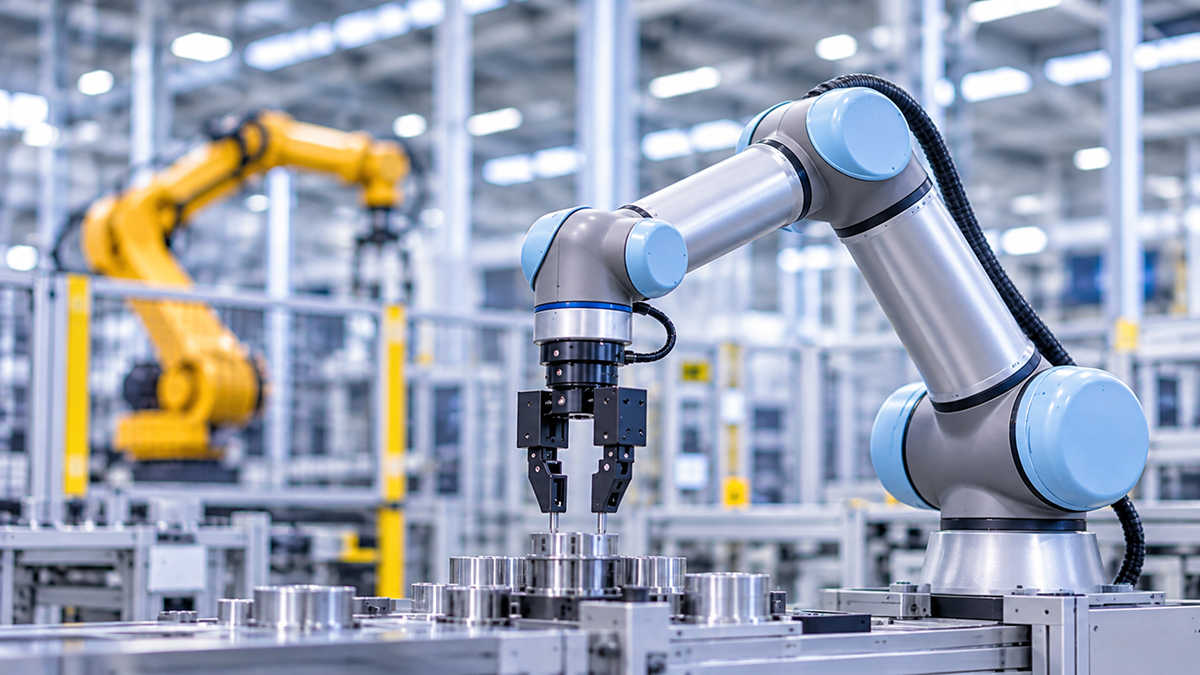
Manufacturing environments are becoming increasingly dependent on automation to improve productivity, consistency and operational efficiency. Robotic systems can be used for repetitive production activities, machine tending, material handling, inspection and other processes where consistent movement and repeatability are important.
One of the developments in industrial automation is the growth of collaborative robots, commonly known as cobots. Unlike traditional industrial robots that are often installed in dedicated work cells, collaborative robots are designed with features that allow them to operate in environments where people and robots may work in close proximity, subject to appropriate safety requirements and application assessment. For manufacturers considering automation in Malaysia, understanding the differences between collaborative robots and conventional industrial robots is an important first step. |
| |
 |
| |
What Is a Collaborative Robot?
|
A collaborative robot, or cobot, is a robotic system designed to support applications where human workers and robotic systems can operate within the same working environment under appropriate conditions. Modern cobots may include features such as integrated vision systems, collision detection and simplified programming interfaces.
These features can make cobots useful for applications where production requirements may change or where manufacturers need flexible automation. 3E Precision is an official distributor of Techman Robot products in Malaysia and promotes Techman AI Cobot solutions as part of its automation offering.
This makes searches such as Collaborative robot distributor Malaysia and Collaborative robot distributor Johor Bahru directly relevant to the company's published business scope. |
|
|
 |
|
| |
 |
|
What Is a Techman TM Robot?
|
| Techman Robot is a range of collaborative robots designed for industrial automation applications. 3E Precision's website features several Techman AI Cobot models, including: |
|
|
|
The different models provide different reach and payload capabilities, allowing manufacturers to consider different robot configurations according to their application requirements. For example, the website states that the TM5-700 has a 700 mm reach and 6 kg payload, while the TM20 provides a 1,300 mm reach and up to 20 kg payload.
Therefore, businesses searching for a Techman TM robot distributor Johor Bahru or Techman TM robot distributor Malaysia can evaluate the available robot models based on their production requirements. |
|
|
| |
What Makes AI Vision Useful in Robotics?
|
Vision technology can give a robot additional information about its working environment.
Instead of simply following a fixed movement sequence, a robot equipped with vision capabilities can use visual information for applications such as: |
 |
 Positioning |
|
 Measurement |
|
 Identification |
|
| |
 Inspection |
|
 Pick-and-place operations |
|
|
| Techman's technology presented on the 3E Precision website includes integrated vision capabilities and AI-powered applications. The website states that its AI-driven cobots can recognise the presence and orientation of objects and support applications such as visual inspection and dynamic pick-and-place tasks. For manufacturers, this can be particularly useful where parts may not always arrive in exactly the same position. |
| |
How Can Collaborative Robots Be Used in Manufacturing?
|
Collaborative robots can support a range of repetitive manufacturing activities.
Depending on the application, they may be used for: |
|
 Machine Tending |
| A robot can move parts to and from a machine as part of a production process. |
|
|
 Pick and Place |
| Robots can repeatedly move components between defined locations. |
|
|
 Inspection |
| Vision-equipped systems can assist with automated inspection applications. |
|
|
 Material Handling |
| Robots can move components or materials between production stages. |
|
|
 Packaging |
| Certain cobot models can be used for packaging-related applications. |
|
|
| The appropriate application depends on the robot's payload, reach, tooling, production environment and required cycle time. |
| |
What Is the Difference Between a Cobot and an Industrial Robot?
|
The terms industrial robot and collaborative robot are sometimes used interchangeably, but they describe different approaches to robotic automation. Traditional industrial robots are often designed for dedicated production environments where the robot operates within a defined work cell.
Collaborative robots are designed with additional safety and interaction features for applications where human workers may operate nearby, subject to proper risk assessment and applicable safety requirements. Techman's product information highlights features such as collision detection, emergency stop functions and configurable speed limits for collaborative applications.
Therefore, a manufacturer searching for an Industrial Robot Johor Bahru or Industrial Robot Malaysia should consider the application first rather than assuming that a conventional robot or cobot is automatically the best solution. |
|
|
.jpg "What Is the Difference Between a Cobot and an Industrial Robot?") |
|